
International medical graduates (IMGs), especially physicians from India play a vital role in the US health care system as physicians, academic teachers and researchers. Indian-Americans constitute less than 1% of the US population, but they account for 9% of the American doctors and physicians. They have long been an integral part of the US health care system, contributing substantially to primary care disciplines and providing care in rural populations of USA. As the US health care system continues to evolve, leaders must recognize the important role that IMGs fill.
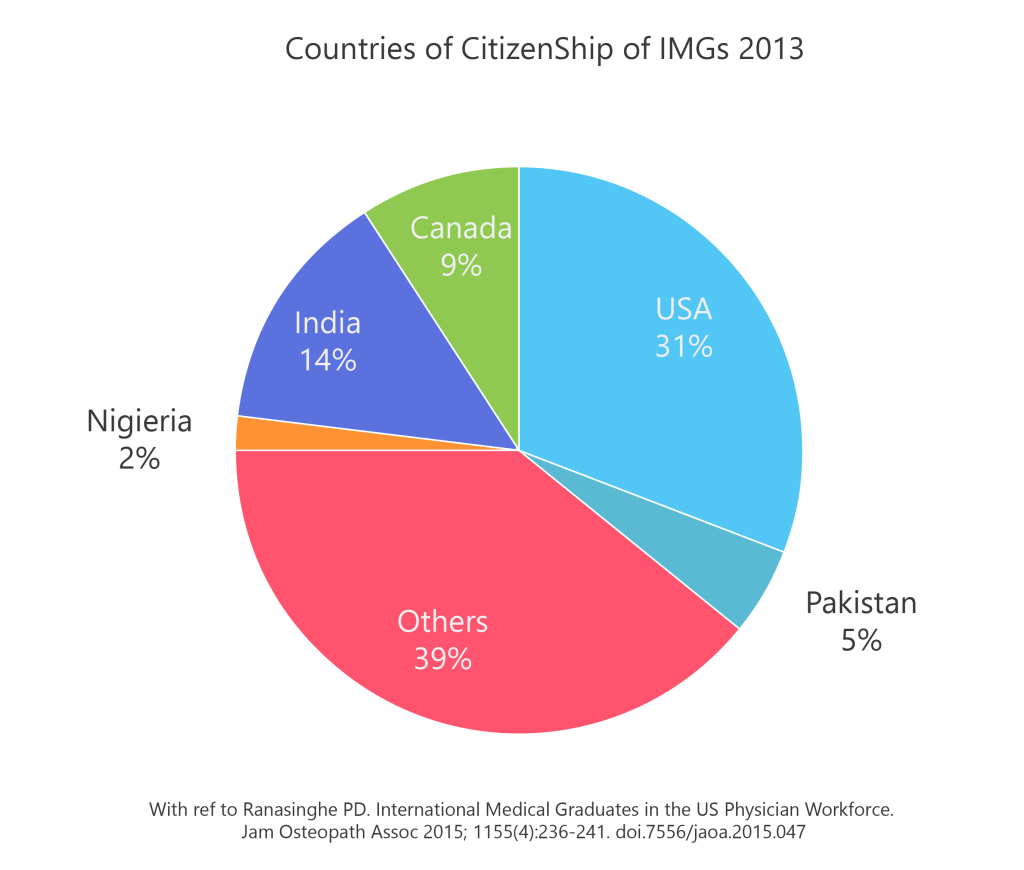
The Council on Physician and Nurse Supply estimates that in 10 years, the United States could have a shortage of 200,000 physicians. The demand for primary-care doctors is expected to stay high, perpetuating the demand for International medical graduates.
As Forbes magazine aptly summed up in an issue in 2009, “The overrepresentation of Indians in these fields (engineering, IT and medicine) is striking – in practical terms, your doctor is nine times more likely to be an Indian-American than is a random passerby on the street.’’
Commonly, there are two types of visas that are offered to IMGs – J1 and H1B visa. Once you finish residency/fellowship training on H1B visa, you can apply for a job where the employer can sponsor you H1B visa. But, if you did residency/fellowship on J1 visa, it is mandated for you to return to your home country for at least 2 years before you can return to US. US Government can waive this requirement by granting a J1 Waiver in which case, you are expected to serve in a rural/under served area in US for at least 3 years without changing the location/employer. Once you successfully complete 3 years of J1 waiver, you are equivalent to a H1B visa holder.
The employer can apply for green card as per the company policy, typically after 1-3 years working with them. Physicians are eligible for green card under EB-2 category which also includes other high skilled immigrants like Engineers. As of now, the Indian doctors applying for green card fall under EB 2 category, and the current wait period for Indian physicians is nearly 70 years. On the other hand, our peers with equal qualifications born in countries other than India applying for green card under EB 2 category can get the green card typically within one year.
Several thousands of Indian physicians in US are waiting for green card and are stuck in the green card backlog which limits a variety of activities. While they are on visa, it is difficult to get into fellowship of their choice/location, cannot start their own private practices, cannot start other businesses, cannot change employer easily, always under stress of insecurity, cannot buy homes or invest in businesses and most likely get a reduced pay compared to peers with green card.
If Indian physicians in US can get green card, they are most likely to do fellowship and serve in the rural areas and provide better healthcare coverage to patients who cannot otherwise get to see a specialist in their neighborhood. They can start working in primary care or other rural hospitals during their free time which is currently restricted by H1B visa. They can also start private practices, businesses and create jobs to American citizens which will immensely boost the US economy.